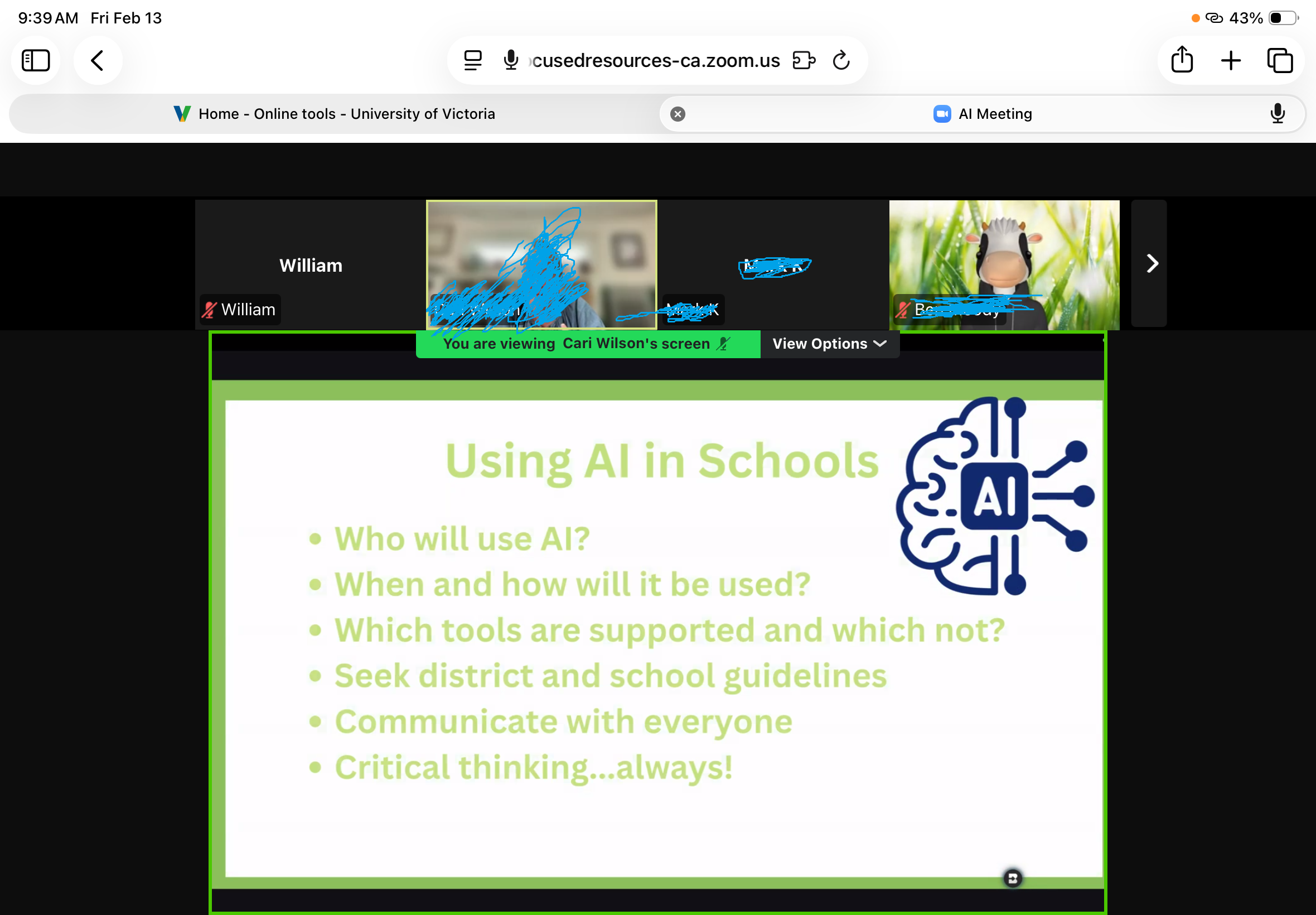
Being part of the K–12 Artificial Intelligence lessons event on Friday February 13th really helped me understand both the excitement and the challenges of bringing AI into the classroom. I learned how technology has changed over the course of the past 20 years and realized just how long it has taken for technology to reach the point we are at today. This made me appreciate that AI is not something that suddenly appeared, it is really a technological masterpiece from years of advancement. I also found it helpful to learn about large language models and how prompts work, because it showed me that AI actually has a system behind it in how it works. This was something I never really even thought of or cared about but it is fascinating how quickly it can produce information. The discussions about privacy, ethics, and deepfakes were eye‑opening too, and they reminded me that teaching about AI to my future students is not just about showing them cool tools or how easy it is to get information. Rather it is also about helping them understand how to stay safe, think critically, and question what they see online. One of my favorite parts of the event was the What, Wonder, Why activity, because hearing other people’s thoughts helped me see things from different angles and pushed my own thinking further. At the same time, I also became more aware of the challenges, like how easy it is to oversimplify AI for younger learners, how overwhelming ethical issues can feel, and how not all students have equal access to technology. All of this made me think carefully about what AI education should look like in a real classroom. One of my other greatest takeaways was the discussion around school boards and how AI use could possibly vary between the districts. I wonder if this will become regulated for teachers where they will have to follow strict rules? Looking ahead, this event made me want to use AI more intentionally in my teaching. I can see how it could support student learning, spark curiosity, and help them build important skills like critical thinking and clear communication. But I am also left with a big question: How do I make sure students use AI appropriately while still doing their own learning. I want AI to be a tool that supports their thinking and not something that replaces it. Going forward, I know I will need to set clear expectations in my classroom and teach students how to use AI responsibly. As of right now, I am not a big proponent of letting students use AI in my class. I think it is taking away from the value of their learning at a young age. This event did not give me all the answers, but it gave me a strong foundation and it made me excited to keep exploring how AI can fit into my teaching in a thoughtful yet balanced way.
Here is a screenshot of the meeting as a fun artifact. I also blurred out the people to respect their privacy.