For this week’s inquiry blog post, I wanted to bring another voice into my project other than my own. I decided to have a zoom discussion with a PE teacher I know from my local district. For privacy, I will call her Rebecca. I got to hear her real experiences as a PE teacher and this helped me understand the connection between fitness, learning, and mental health in a much more practical way.
Rebecca started by telling me that she thinks the most effective fitness practices in schools are actually the small ones. She said that even a five‑minute warm‑up or a quick movement break can completely change the energy in the room. She notices students come in tired or stressed to her classes and after a short routine like jumping jacks, they are more focused and ready to learn. This is really important to know because as a Socials teacher I am considering having my students take small breaks throughout class to stretch or get up and move because I know how hard it is to sit all day long.
She also talked about what does not work. When activities become too competitive, she sees students shut down. She mentioned specific sports where students avoided participating because they felt embarrassed or worried about being judged. Hearing her describe these situations made me think more about how important it is to create fitness opportunities that feel safe and inclusive. Perhaps this could look like PHE classes being leveled so it is a fair environment where you are not having the athletes vs the students that are just there for fun.
One thing she emphasized was how much movement helps with emotional regulation for her students. She sees a noticeable difference in their moods after a gym class. Everyone has so much energy and the gym is usually bouncing off the walls.
She also pointed out that teachers can really benefit too and not just the PHE staff. She joked that some days she needs the warm‑up more than her students. It reminded me that fitness supports the whole school community, not just kids.
My Role as a Socials Teacher
Rebecca was honest with me about the challenges of bringing fitness into a Socials classroom. She said it would be harder for me because my subject is not naturally movement‑based obviously but she also encouraged me by saying that even small things like stretch breaks or quick walks can still make a difference.
At the same time, she believes schools as a whole should be putting more focus on fitness. She said that if the school culture supported movement more consistently, it would not fall entirely on individual teachers to figure it out. Hearing her say that made me think about how fitness needs to be a school‑wide priority, not just something left to PHE. Maybe this could look like school wide walks or fitness days having different stations for different student interests.
Having this conversation helped me see a practical side of my project as hearing about real examples showed me how closely movement is tied to students health and the classroom climate. If everyone shows up to class after sitting in a chair all day staring at a screen, how are they supposed to feel good and energized?
She also made me realize that I do not need to reinvent my Socials classroom to support fitness. Even small things like stretching breaks is something I wish I had in my classrooms back in high school.
Overall, this conversation grounded my project in hearing real life classroom experience and this helped me understand what is actually working for teachers and students right now.
Here is the link to my groups presentation! Assignment 2 – Education Technology Presentation Video – EDCI 336 William Spencer UVic
Doing this project was a great learning opportunity and I think one of the greatest takeaways is how Slido is such a useful tool in the modern day classroom. What stands out to me is how it allows all kids to participate and it can make school fun. I am also now better prepared to use this technology tool which I see as a big takeaway from this class. I can actually walk out of here with a skill that I have learned and I plan to use Slido in my practicum. I also appreciated the ability to work with my peers on this assignment. It was a useful way to network and build a sense of shared experience with some people in the program. Doing this assignment also has made me more interested in searching for new technologies to use in the classroom and I hope to have a close look at some of the work my peers have done as well.
Further talking about Edcamps, as a future teacher I really like the ideas of them. It is all about teachers learning from each other in a relaxed, open way. Instead of having a set schedule, people choose topics they care about and have real conversations about what works in the classroom. I appreciate how collaborative it feels since everyone shares their ideas, asks questions, and builds on each other’s experiences. It makes professional learning feel more meaningful and connected. I can see myself getting a lot out of this kind of environment and contributing my own ideas as I grow in the profession. I hope I have the opportunity to participate in an EdCamp when I am out in the field as a teacher in my district. A question I raise is if many districts use these learning opportunities for their staff? It is exciting to think about the professional development opportunities in this line of work.
In our group discussion about AI for teachers, I learned a lot from hearing everyone’s ideas. We talked about how AI can help with planning, giving feedback, and saving time, but also how teachers still need to use good judgment and keep students’ needs first. I learned about new platforms such as claude and we talked about how notebook is good for making presentations. This is something I want to try because making presentation slides every day for teaching is something that sounds daunting. The conversation made me think more about using AI as a support tool rather than something that replaces the teacher. Overall, it helped me understand both the benefits and the limits of AI in the classroom.
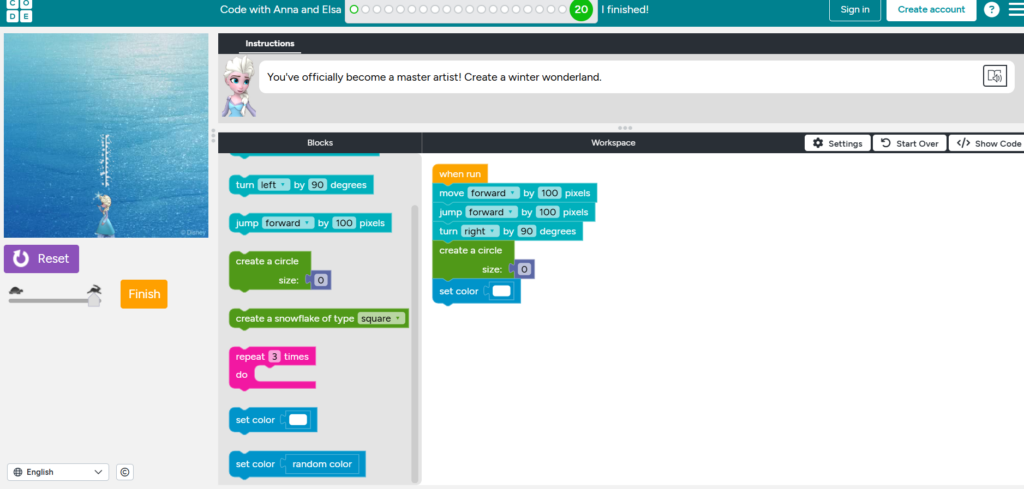
This week I tried coding for the first time and it was definitely a challenge for me. Even working through this lab with Elsa as seen in the screencast, I found myself struggling to understand what I was supposed to do and how the different pieces fit together. There were moments where I felt stuck, and it took a lot of patience to keep going. I am a very non tech savy person so this activity challenged me but it was also fun in a few ways.
You can see this in the screencast I recorded there are sections where things finally clicked as I got the character to move and do a spin but it took a few tries to get there. It was not perfect, but it was real learning, and I am proud that I pushed through instead of just giving up.
I can see how coding might be exciting for people who enjoy computers or want to teach tech-related subjects. For me, though, I do not think I will ever use this in a Socials classroom. It is always fun to explore new tools and learn about different types of technology, but after this experience, I think I will be keeping my distance from coding. It is great for some teachers, just not something I see myself using in my own teaching practice. Teachers who are teaching computers classes might find this as a valuable tool to try out.
Personal Experiment I tried A Routine!
This past week, I tried three different fitness and mindfulness routines to see how they might affect my mood, focus, and stress. Nothing complicated, just a nature walk, a gym session, and a short meditation at home. I tracked everything and reflected on this blog post how each activity made me feel. I started with a long walk through a nearby trail. I did not push myself physically, I just let myself move at a comfortable pace. What surprised me was how quickly my mind settled. Being surrounded by trees and open space gave me a sense of calm I didn’t realize I had been missing. My stress dropped noticeably, and for the rest of the day I felt more patient and grounded. It was the kind of quiet reset I did not know I needed. Then, mid‑week, I went to the gym for a more structured workout. This one challenged me the most physically, but it also gave me the biggest boost in focus. After lifting weights and doing some cardio, I felt sharper and more energized. It was like my brain switched into a clearer mode and I felt really energized and ready to take on school work for the rest of the day. At the end of the week, I tried a short meditation session at home. I used a guided audio track and sat for about ten minutes. This was the hardest routine mentally because my thoughts kept drifting, and I caught myself checking the time more than once. But even with the struggle, I noticed a subtle shift afterward and my stress did not disappear, but it was less noticeable. I felt a little bit more centered and less reactive. Across all three routines, the biggest realization was how directly movement and mindfulness affect my mental health. Each activity helped in a different way as nature helped me slow down, the gym helped me focus, and meditation helped me breathe through stress. I did not expect such clear differences, but tracking my reactions and thinking about them critically made them impossible to ignore.
The hardest part was consistency. Some days I did not feel like doing anything, and it took real effort to push myself. The meditation was especially challenging because sitting still with my thoughts is not something I am used to. I am still realizing that these small habits are not just good for me but they genuinely shift how I felt, thought and handled stress.
Technology Tool For Wellness
I wanted to highlight using the technology apple fitness + as this is a fitness tool that I have personally used. It has many features such as guided workouts, yoga, dance, and even meditation sessions. This could be a really useful tool for teenagers who might not know where to start when it comes to their own fitness and doing workouts. What I like most is that the workouts offered come in different lengths so I can fit them into my day after having taught all day. The sessions also change often which keeps things from feeling repetitive. Although it is a paid fitness app I think it belongs in people’s lives because of how accessible it is. Most teens already have an iPhone, so getting started on the app does not require buying anything extra and for someone who does not feel comfortable going to a gym, it is nice to have something to use privately at home. I see these as positives of this tool and I think that by using technology for fitness it turns exercise into something fun instead of something someone might feel pressured to do.
SkillScope Tutorials (2025). “How To Use Apple Fitness App-Full Guide”. How To Use Apple Fitness App – Full Guide
I wanted to include this video above to show how to use the basic Apple Fitness in a way that is easy to understand. Instead of me just explaining how the app works, if I were to show this to students, they can watch the video which walks through each step on the screen. Students can actually see where to tap, how to start a workout, and what the different features look like. This makes the information much more real and less confusing. They would then be more informed of whether it is something they could use and might consider upgrading to the paid version. I also like that the video is short and visual, which fits how many teens want to learn by not being bored over large amounts of information.
My Attempt At Making A Screen Cast Image Accessible & Using Headings.
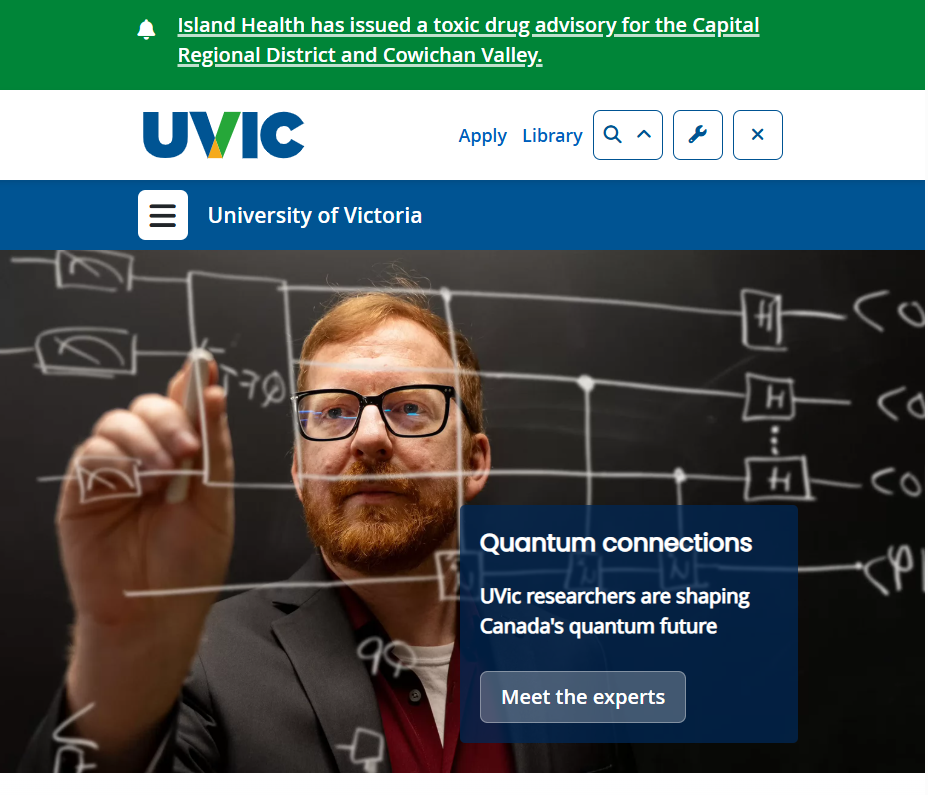
screen cast Image made accessible. I took this screenshot from Home – University of Victoria on 2026-02-28.
I think many digital accessibility practices are not very well‑known because people often assume technology just works for everyone, and they do not realize how many barriers some users face. I also feel that accessibility can seem technical or overwhelming, so it does not get taught or talked about enough in everyday settings. Because of this, it is easy for people such as designers, teachers, and students. who use technology everyday to overlook simple steps like using clear headings that would make digital spaces easier to understand for everyone.
Something else that stood out to me this week was why is it important for educators to think about accessibility when they are creating digital learning materials.
I think it is important for educators to think about accessibility because students learn in different ways, and relying only on text can make it harder for some people to understand the material. When teachers include links to videos, audio clips, or interactive tools, it gives students more than one way to take in information, which makes learning more flexible and inclusive. I have seen this in practice when I have taught a lesson. The students are much more intrigued and willing to learn when I have videos and fun interactive games for them to play. I think that videos can explain ideas that are confusing in writing, and they help students who learn better by seeing or hearing something instead of just reading it. I have also personally noticed this in my own classes sometimes a short video helps me understand a concept much faster than a long paragraph, and it keeps me more focused. Using different formats makes the learning experience clearer, more accessible, fun, and welcoming for everyone.
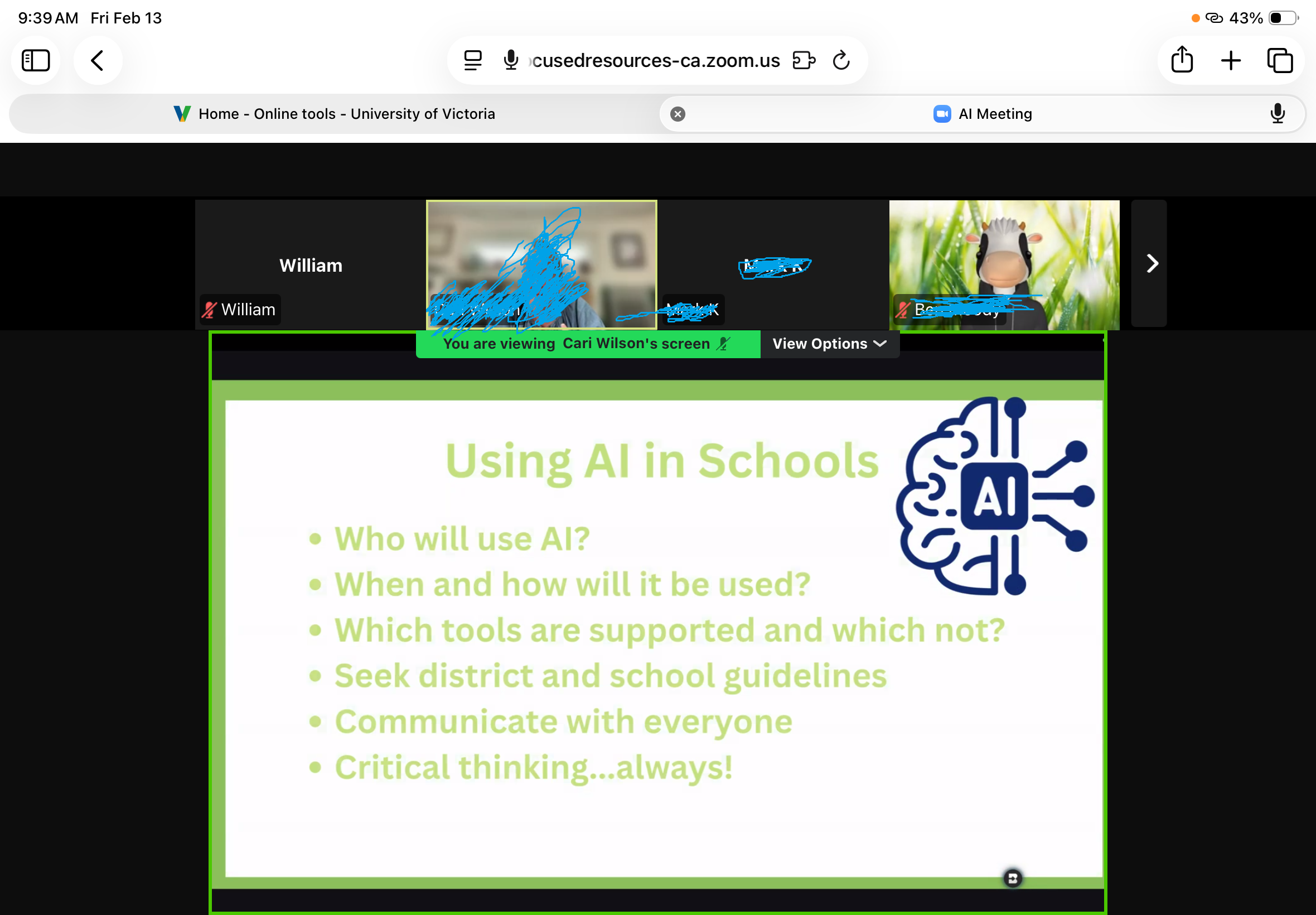
Being part of the K–12 Artificial Intelligence lessons event on Friday February 13th really helped me understand both the excitement and the challenges of bringing AI into the classroom. I learned how technology has changed over the course of the past 20 years and realized just how long it has taken for technology to reach the point we are at today. This made me appreciate that AI is not something that suddenly appeared, it is really a technological masterpiece from years of advancement. I also found it helpful to learn about large language models and how prompts work, because it showed me that AI actually has a system behind it in how it works. This was something I never really even thought of or cared about but it is fascinating how quickly it can produce information. The discussions about privacy, ethics, and deepfakes were eye‑opening too, and they reminded me that teaching about AI to my future students is not just about showing them cool tools or how easy it is to get information. Rather it is also about helping them understand how to stay safe, think critically, and question what they see online. One of my favorite parts of the event was the What, Wonder, Why activity, because hearing other people’s thoughts helped me see things from different angles and pushed my own thinking further. At the same time, I also became more aware of the challenges, like how easy it is to oversimplify AI for younger learners, how overwhelming ethical issues can feel, and how not all students have equal access to technology. All of this made me think carefully about what AI education should look like in a real classroom. One of my other greatest takeaways was the discussion around school boards and how AI use could possibly vary between the districts. I wonder if this will become regulated for teachers where they will have to follow strict rules? Looking ahead, this event made me want to use AI more intentionally in my teaching. I can see how it could support student learning, spark curiosity, and help them build important skills like critical thinking and clear communication. But I am also left with a big question: How do I make sure students use AI appropriately while still doing their own learning. I want AI to be a tool that supports their thinking and not something that replaces it. Going forward, I know I will need to set clear expectations in my classroom and teach students how to use AI responsibly. As of right now, I am not a big proponent of letting students use AI in my class. I think it is taking away from the value of their learning at a young age. This event did not give me all the answers, but it gave me a strong foundation and it made me excited to keep exploring how AI can fit into my teaching in a thoughtful yet balanced way.
Here is a screenshot of the meeting as a fun artifact. I also blurred out the people to respect their privacy.
For this weeks post I wanted to take a closer look at background research as a way to be more informed and build some knowledge as I get further into my project
I found this video How Exercise Rewires Your Brain for Better Mental Wellbeing interesting because it explains how exercise actually changes the brain, not just how we feel. Hearing a doctor break down the immediate and long‑term mental health benefits made me think differently about why movement matters, and it gave me practical ideas I can use in my own routine. It also feels important for my inquiry project because it gives me a research‑backed way to show that movement is a meaningful mental‑health support for people and can help emphasize this in the case of my project for both teachers and students.
The study by Zulyniak, Williams, Bulloch, Lukmanji & Patten (2020) looked at a large sample of Canadian youth aged 12–17 to explore how different types and amounts of physical activity relate to mental health outcomes. They focused on topics such as depression, mental health, and the difference between recreational and non‑recreational physical activity. An interesting finding from Zulyniak et al. (2020) is how “For each negative mental health outcome examined, there is a reduced frequency of poor mental health in association with higher levels of recreational physical activity (pg. 244).
Zulyniak, S., Williams, J. V. A., Bulloch, A. G. M., Lukmanji, A., & Patten, S. B. (2020). Physical Activity and Mental Health: A Cross-sectional Study of Canadian Youth. Journal of the Canadian Academy of Child and Adolescent Psychiatry, 29(4), 241–252. Ccap29_p0241.pdf
Overall, I was not very surprised to read and listen about how exercise is good for us but I think I am much more aware of it now that I have taken the time to view these sources. This has set a strong foundation for my project going forward as I am more informed in this topic area.